
Translated from Hungarian by: Hannah Marásek
The butterfly effect is a phenomenon that appears in some form in every person’s life. Sooner or later, we all face the realization that a small decision or an act that seems insignificant can lead to unexpected, even serious consequences. From such situations, we can often draw important lessons, even if at the moment we do not fully perceive the real weight of our decision.
How can a small decision trigger an unpredictable chain of events? – The logic of the chaos theory
The scientific foundations of the theory were laid by Edward Lorenz in 1963, when, during his research on atmospheric processes, he concluded that systems are extremely sensitive to initial conditions. According to one of the basic principles of chaos theory, a seemingly negligible change can eventually produce enormous and difficult-to-predict consequences. According to the well-known metaphor, even the flap of a butterfly’s wings could set off a distant storm, though of course this is meant in a symbolic sense.
But what does science have to do with pop culture?
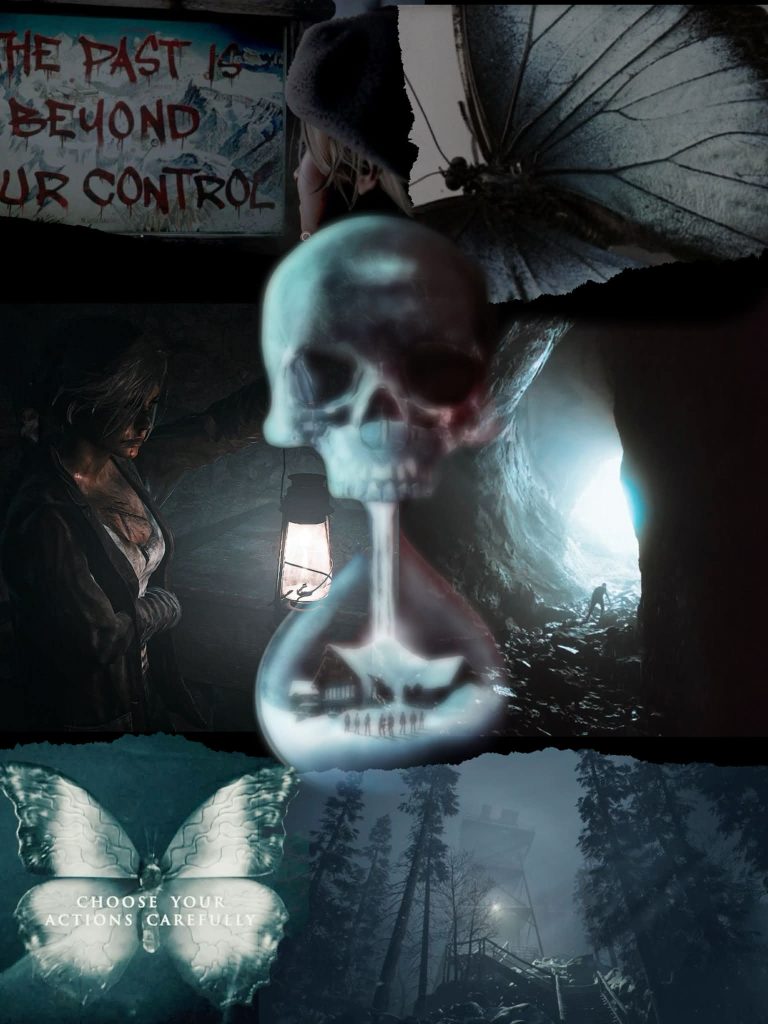
Until Dawn is an interactive horror game released in 2015, developed by Supermassive Games and published by Sony Computer Entertainment. The game’s uniqueness lies in the fact that the progression of the story depends entirely on the player’s decisions. The developers aimed to create a game in which every choice carries weight, and even a seemingly insignificant decision can trigger dramatic plot twists.
The story revolves around eight young people who return to an isolated cabin in the Canadian mountains one year after the tragic death of two of their friends. The visit was originally meant for remembrance and spending time together; however, the evening soon takes a sinister turn. Not only does a mysterious and unpredictable “stranger” appear in the area, but creatures living deep within the mountains, beings that hunt humans, also pose a threat to them. Cut off from the outside world, their only chance of survival is to endure until sunrise, when help might finally arrive.
Throughout the game, the player takes control of all eight characters across different chapters. The decisions made do not merely influence the development of the story, but they also directly affect whether the characters live or die. A choice made at the wrong moment can have fatal consequences. The story can conclude with several different endings, depending on which path the player chooses.
At the end of each chapter, Dr. Hill, the psychologist, appears. During strange, almost unsettling conversations, he asks the player a series of questions. These questions concern not only the characters in the story, but also the player’s personal fears and their personal attitudes toward certain characters. The answers later influence the game, shaping both its atmosphere and certain events. In addition, the reactions given during dialogues affect the personalities of the characters and their relationships with one another, meaning that the player shapes not only their fate but their character as well.
But how does all of this connect to reality?
Until Dawn is not merely a frightening story: in many ways, it is a playful representation of how the butterfly effect works. During the story, a single small decision can lead to fatal consequences, while in real life, such effects usually unfold more slowly and less dramatically. The core idea, however, remains the same both in the game and in reality: every choice sets a process in motion whose outcome we cannot fully foresee.
Just as in the game, a careless remark can shake a relationship, while a supportive interaction can strengthen it. A missed opportunity can influence the direction of our lives years later… A single poor decision – even if it seems insignificant at the time – can set an entire chain of events in motion.
In the gameworld, this results in dramatic twists, where even a single choice can steer the story in a new direction and lead to a completely different, often lethal conclusion.
The real difference lies in scale and tempo. On the screen, these consequences appear immediately and spectacularly, whereas in life it often takes much longer before we recognize the true gravity of a seemingly small decision.
Overall, the butterfly effect is much more than a scientific theory. It is part of all our lives. We do not follow a prewritten story; instead, we shape our own path through a series of small decisions. A spoken sentence, a missed opportunity, or a sudden choice can guide our lives in directions we never anticipated – indeed, directions we probably did not even consider at the time.
Until Dawn condenses this phenomenon into a single night. We act in the moment without knowing the full picture. Do we truly control our lives, or do we merely react to a constantly changing system?
Perhaps the most unsettling question is not what might have happened if we had chosen differently in each situation, but rather how many moments there have already been in our lives that seemed insignificant at the time – yet quietly determined the path that has led us to where we are today…
A pillangóhatás olyan jelenség, amely valamilyen formában minden ember életében megjelenik. Előbb-utóbb mindannyian szembesülünk azzal, hogy egy apró döntésünk vagy jelentéktelennek tűnő tettünk váratlan, akár komoly következményekhez vezet. Ezekből a helyzetekből gyakran fontos tanulságokat vonhatunk le, még akkor is, ha az adott pillanatban nem érzékeljük döntésünk valódi súlyát.
Hogyan indíthat el egy apró döntés kiszámíthatatlan eseményláncolatot? - a káoszelmélet logikája
Az elmélet tudományos alapjait Edward Lorenz fektette le 1963-ban, amikor a légköri folyamatok vizsgálata során arra a következtetésre jutott, hogy a rendszerek rendkívül érzékenyek a kezdeti feltételekre. A káoszelmélet egyik alapelve szerint egy elsőre elhanyagolhatónak tűnő apró változás idővel hatalmas, nehezen kiszámítható következményeket idézhet elő. A közismert metafora szerint akár egy pillangó szárnycsapása is képes lehet elindítani egy távoli vihart de ezt természetesen jelképes értelemben.
Mégis mi köze lehet a tudománynak a popkultúrához?
Az Until Dawn egy 2015-ben megjelent interaktív horror játék, amelyet a Supermassive Games fejlesztett, és a Sony Computer Entertainment adott ki. A játék különlegessége, hogy a történet alakulása teljes mértékben a játékos döntéseitől függ. A fejlesztők célja egy olyan játék elkészítése volt, amelyben minden választásnak súlya van, és akár egy apró, jelentéktelennek tűnő döntés is drámai fordulatot idézhet elő a cselekményben.
A történet nyolc fiatal köré épül, akik egy évvel két barátjuk tragikus halála után visszatérnek a kanadai hegyek között álló elszigetelt házikóba. A látogatás célja eredetileg az emlékezés és a közös időtöltés volt, ám az este hamar baljós fordulatot vesz. Nemcsak egy rejtélyes, kiszámíthatatlan ”idegen” bukkan fel a környéken, hanem a hegyek mélyén élő, emberre vadászó lények is veszélyt jelentenek rájuk. A külvilágtól elzárva egyetlen esélyük a túlélésre, ha kibírják napkeltéig, amikor végre segítség érkezhet.
A játék során a játékos mind a nyolc szereplő irányítását átveszi különböző fejezetekben. A döntések nem csupán a történet alakulását befolyásolják, hanem konkrétan a karakterek életét is. Egy rossz pillanatban meghozott választás akár végzetes következményekkel járhat. A történet többféle befejezéssel zárulhat, attól függően, hogy a játékos milyen utat választ.
Minden fejezet végén megjelenik Dr. Hill, a pszichológus, aki különös, már-már nyugtalanító beszélgetések során kérdéseket tesz fel a játékosnak. Nemcsak a történet szereplőiről kérdez, hanem személyes félelmekről és egyes karakterekhez való szintúgy személyes viszonyulásról is. A válaszok később kihatással vannak a játékra, formálva a hangulatot és bizonyos eseményeket is. Emellett a párbeszédek során adott reakciók a karakterek személyiségére és kapcsolataira is hatással vannak, így a játékos nemcsak a sorsukat, hanem a jellemüket is alakítja.
De hogyan kapcsolható mindez a valósághoz?
Az Until Dawn nem csupán egy ijesztő történet, hanem tulajdonképpen a pillangóhatás működésének játékos formába öntött bemutatása. A történet során egy-egy apró döntés végzetes következményekhez vezethet, míg a való életben általában lassabban, kevésbé látványosan bontakoznak ki. A lényeg ugyanaz itt is, mint a valóságban: Minden választás elindít egy folyamatot, amelynek kimenetelét nem látjuk teljesen előre.
Akárcsak a játékban, egy meggondolatlan mondat képes megingatni egy kapcsolatot, míg egy támogató interakció megerősítheti azt. Egy elmulasztott lehetőség évekkel később is befolyásolhatja, merre halad az életünk… Egyetlen rossz döntés pedig - ha akkor még jelentéktelennek tűnik is - események egész sorát indíthatja el.
A játék világában ez drámai fordulatokat eredményez, ahol, akár már egyetlen választás is új irányba terelheti a történetet, és teljesen más, sokszor végzetes végkifejlethez vezethet.
A különbség valójában a mértékben és a tempóban rejlik. Míg a képernyőn ezek azonnal és látványosan mutatkoznak meg, addig az életben gyakran hosszabb idő kell ahhoz, hogy felismerjük egy-egy apró választás valódi súlyát.
Összességében a pillangóhatás jóval több, mint egy tudományos elmélet. Valójában mindannyiunk életének része. Nem egy előre megírt történetet követünk, hanem apró döntések sorozatán keresztül alakítjuk a saját utunkat. Egy kimondott mondat, egy elszalasztott lehetőség vagy egy hirtelen meghozott választás olyan irányba terelheti az életünket, amelyet akkor még nem is sejtünk, sőt, valószínüleg mégcsak nem is gondolunk rá.
Az Until Dawn ezt a jelenséget sűríti egyetlen éjszakába. A pillanatban cselekszünk, miközben nem ismerjük a teljes képet. Valóban mi irányítjuk az életünket, vagy csupán csak reagálunk egy folyamatosan változó rendszerre?
Mégis a legnyugtalanítóbb kérdés nem is az, hogy mi lett volna, ha másképp döntünk egy adott helyzetben, hanem az, hogy vajon hány olyan pillanat volt már az életünkben, amely akkor jelentéktelennek tűnt, mégis csendben meghatározta mindazt, ahova ma tartunk…
Kép: Csere Lara