
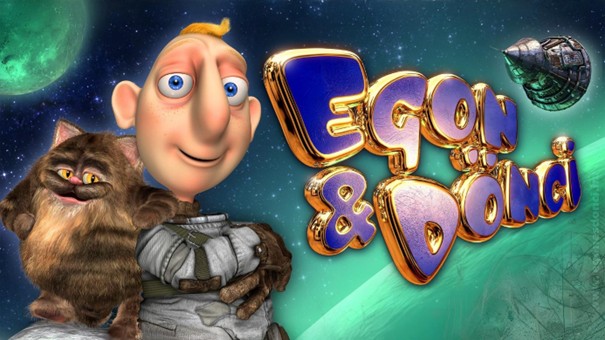
What would an outer space creature say about the (self-)destruction of human society? – This is essentially the question explored in the animated film Egon and Dönci. Released in 2007, this dialogue-free story with only three characters can be interpreted both as a child-friendly fairy tale and as sharp social criticism. Why all this matters today and what lies behind the inspiration for the story, are questions we discussed with the film's director, Ádám Magyar.
Who are Egon and Dönci anyway?
Despite receiving significant international attention upon its release, the film seems to have faded completely from public consciousness. The film, made by a crew of a dozen people, was the first domestic feature-length 3D animation created using CGI technology, all the while without any support from the state. It also stood out from other mass-produced films of the time in that it was accessible to anyone online and could be downloaded for free, even in HD quality. This is still the case today; the entire film is available on the director's YouTube channel. Although the reception following its release was not exclusively positive, critics who appreciated the film praised its visuals, non-violent approach, and thought-provoking message.
The story begins on a fictional planet where Egon, a dreamy, somewhat human-like figure living in a harmonious environment, unexpectedly learns about our solar system and Earth's civilization when a space probe crashes into his planet. As an amateur space explorer, this piques his interest. To investigate the mystery of Earth's inhabitants, he builds a spaceship and embarks on an interstellar adventure with his companion, Dönci, a cat-like creature who is constantly dreaming of delicious treats.
While the duo encounters various complications in space during their journey, which covers most of the plot, the film guides the viewer through relatively slow-paced, visually rich scenes. The characters do not speak; their interactions consist of grunts and nonverbal communication, thus ensuring that the story's global accessibility and interpretive possibilities are not limited by language barriers. However, behind the charm and humorous, sometimes slightly silly tone that radiates from the film, serious thoughts are expressed, which to a child's eye may only give the story a strangely gloomy atmosphere, but to an adult can be quite unsettling.
Facing the depravity of humanity
The moment in the film when Egon sees a montage of real photographs, visually contrasting with the animated environment, can be considered a key scene. Then it becomes clear that the former inhabitants of planet Earth, which had almost completely died out by the time of the story, were responsible for acts of cruelty.
As photos suggesting peaceful coexistence are replaced by images depicting aggression, wars, natural disasters, starving children, urban spread, overpopulation, poverty, excessive consumption, and environmental pollution, the smile freezes on Egon's face. And with it, probably the viewer’s does too.
This is where the film's complexity becomes apparent. The issues it presents to the audience with palpable anger have (unfortunately) not only remained relevant since 2007 but are knocking ever louder on our door. Or perhaps they are already present. In any case, it is worth talking about them – in fact, we could even say that we must talk about them. So the question arises as to what Egon would think of the world of the 2020s. Among other things, I asked the film's creative father about this.
Egon and Dönci, the fruit of anxiety
Ádám Magyar, who currently works primarily as an animation film director, studio manager, and producer, admits that he was ahead of his time in that, unlike the majority who were still in denial at the time, he was already struggling with ecological anxiety eighteen years ago.
In his twenties, he was not yet moved by issues related to social or environmental crises (although as a child he used to go on trips to garbage dumps because he “found them exotic”), but then, finding himself in personal difficulties, he became angry at the whole world and began to feverishly search for meaning in everything. During this period, he made a living creating television titles, music videos, and commercials, until one night he woke up from a nightmare and realized that he “wanted to make an animated cartoon.”
This sudden realisation was the result of a process he describes as a “spiritual twist” – to overcome his existential crisis, he started analysing how life operates, searching for purpose and meaning in the chaos, until he eventually came to decide: it was about time to focus on something tangible. This is how the inspiration for Egon and Dönci was born in Ádám’s mind. In other words, he began to build his own spaceship.
Kommuna: “like football in the old days; you need a team.”
To bring his vision to life, he started gathering a group of friends and artists around himself instead of a big crew, hoping that they would put their hearts and souls into the process instead of just focusing on making money. He believed that it was not financial considerations that would determine the collaboration, but the goal of joint creation.
“The wind blew a bunch of really talented people together, and somehow I ended up in the middle of it all”, this is how he recalls the birth of Kommuna, which his brother and father also joined (as did, for example, Zsolt Macsinka, “one of the Hungarian musical geniuses of the century”), and which, following the example of early social media platforms (and media-optimistic views), set itself the goal of “liberalising the internet.” Despite all this, ironically, it was money that ultimately brought the “artists’ colony” to an end, when the group faced financial difficulties after the film was completed: “the ship creaked and groaned, and within months the team fell apart.”
With the collapse of Kommuna, “a great illusion went up in smoke”, but the core group managed to survive. This gave rise to the later GreenZero project, “the business venture built on the ruins of Kommuna.” Today, it is worth mentioning the Aenimax studio, associated with Ádám Magyar.
But even before the ship began to creak and groan, the making of the film itself raised some concerns; recalling the studio's late-night drinking sessions, out-of-control pool parties, and extreme behaviour, the director poses an interesting question: “can’t art be separated from debauchery?”
Dichotomies: “halfway between evil and good”
One of the main characteristics of Egon and Dönci is the duality that reveals itself on multiple levels in the film. It presents itself as light-hearted, yet it has weight; it uses humour yet remains bittersweet; it strives for simplicity yet is complex; it contains no dialogue yet delivers a serious message.
Ádám Magyar considers himself an atheist – yet deeply religious. His role model is Jesus, while the “clerical background” of Christianity horrifies him. He walks into a church in awe, but when he leaves, he feels sick at the thought of how many slaves may have died during its construction.
He “deeply despises” consumer society, yet “enjoys shopping on Temu.” He considers himself a Marxist but does not want to appear snobbish by failing to acknowledge the benefits of consumer society, such as technological innovations and the convenience of digitalisation.
He has “zero blindness”: if he is ripped off by five hundred forints in a store, he is outraged, but if he loses five million on a project, he says, “never mind.”
He thinks he may sometimes appear strict, but “there is no sinner he would not be able to forgive.” He often refers to himself as “lazy”, but he also states that he is “a terrible military officer to himself.”
When he makes a film, he doesn't do it for us, but for himself. His goal is not to appeal to the audience, but to appeal to himself. Because that's what he thinks makes it good. However, he has noticed that other people like it when he likes it. And when he likes it, he no longer cares whether other people like it.
When someone else makes a film that aims to appeal to the audience, he charges it to Hollywood. In such cases, he believes that viewers are “not seeing the director's artistic concepts, but rather the end product of mass production”: “the dream factory produces the dream.” He cannot resonate with mainstream films, but he does acknowledge James Cameron for putting the “noble message” he articulates through Avatar.
His next project is to make a mainstream film. One that he likes. He believes that “the creative community suffers from a lack of ideas, falling into the trap of 'everything for viewership', which has sacrificed talent; innovation has disappeared, people are spoiled...” So, the film's message will be deep after all, but the tone will be light-hearted. A kind of critical reflection in commercial disguise.
He has been an environmentalist for many years, but there have been times when he simply threw an empty beer can into the bushes. He resists the ostrich policy, believing that “there is a law of litter persistence” meaning that the problem does not disappear just because it is out of sight.
His university thesis (in the degree program he completed in Pécs) was titled “The Creative Machine” and was a futuristic vision of a machine capable of creating artistic works without any human intervention. “This essay was written more than 30 years ago, when people didn't even have computers at home, let alone the internet or AI...” Regarding the latter, he believes that it is “nothing more than a very cheap solution for tasks that require a high level of technical knowledge and can be automated," which, in his opinion, "is advancing technologically, but not dramaturgically.”
Nevertheless, he describes the current situation as follows: “it has long been the case that people no longer live for people, but machines live for machines.” In his opinion, the problem lies in the fact that “it is difficult to feed the machines, and eventually they are going to be eating us”, because “whether we like it or not, it is not normal to transport vast quantities of batteries from one part of the world to another in gigantic, oil-spewing ships.”
He feels that people will never be in balance with the system they have established. “We have created a contradictory world around ourselves from which there is no escape” – according to him, this “can only be dealt with through anxiety,” which in turn “destroys our existence,” so we are “forced to ignore it on some level, but as individuals, we must live according to our own beliefs.”
For him, “art is a voice for his own suppressed frustrations,” his “political, moral, and philosophical anxieties,” which are “generated by the contradictions of human existence.”
He has moved between dualities and extremes his entire life. He negotiates with billionaires, then chats in the dim light of pubs. He feels stable in the middle of these contrasts. In spirit, he plays the teenager, riding his bike everywhere. He feels that he “never managed to transform into an adult.”
Adulthood
Although he himself remained a child, his film reached adulthood. At the time of our conversation, almost exactly to the day, in November 2025, Egon and Dönci turned eighteen.
When I asked what Egon would say about today's world, Ádám Magyar told me how the story would continue. If there had been a second part to the film, Egon and Dönci would have stayed on their own planet and, having learned the lessons of the original story, would have started to farm sustainably, experimenting with a more sustainable way of life. As a romantic subplot, a female character also appears in Egon's imagined future who, in the director's words, is “just as silly as he is.”
Mit szólna egy földönkívüli lény az emberi társadalom (ön)pusztításához? – Lényegében ezt a kérdést járja körbe az Egon és Dönci című animációs film. A 2007-es megjelenésű, csupán háromszereplős, dialógus nélküli történet egyszerre értelmezhető gyerekbarát meseként és éles társadalomkritikaként. Hogy mindez miért lehet fontos ma és mi áll az ihlet hátterében, arról a film rendezőjével, Magyar Ádámmal beszélgettünk.
Mi is egyáltalán az az Egon és Dönci?
Annak ellenére, hogy a mű, bemutatásakor jelentős nemzetközi figyelmet kapott, mára mintha teljesen háttérbe szorult volna a köztudatból. Az állami támogatás nélkül, egy tucatnyi főt számláló stáb által készített film volt hazai viszonylatban az első, CGI, azaz számítógépes technikával létrehozott egészestés 3D animáció, emellett pedig azzal is kitűnt a korabeli tömegproduktumok közül, hogy online bárki számára hozzáférhető, illetve ingyenesen letölthető volt, akár HD minőségben is. Ez ma sincs másképp; a teljes film elérhető a rendező YouTube csatornáján. A megjelenését követő fogadtatás ugyan nem volt egyöntetűen pozitív, az alkotást elismerő kritikák a vizualitást, az erőszakmentességet és az elgondolkodtató mondanivalót is méltatták.
A történet egy fiktív bolygón indul, ahol a harmonikus környezetben élő Egon, a szórakozott, némiképp emberformára hajazó figura, egy nap egy becsapódó űrszonda által váratlanul tudomást szerez a naprendszerünkről és a földi civilizációról, ez pedig, amatőr űrkutató lévén, felkelti érdeklődését. Hogy utánajárjon a földlakók rejtélyének, űrhajót épít, és nekivág egy csillagközi kalandnak, lakó- és útitársával, Döncivel, az örökösen finom falatokról ábrándozó macskaszerű lénnyel az oldalán.
Mialatt az egymást szórakoztató módon kiegészítő duó a cselekmény nagyrészét felölelő út során különféle űrbéli bonyodalmakba keveredik, a nézőt viszonylag lassú tempójú, vizuálisan részletgazdag jeleneteken kalauzolja végig a film. A szereplők nem beszélnek, egymás közti interakcióik hümmögésekből és nonverbális kommunikációból tevődnek össze, ezáltal a történet globális elérhetőségét és interpretációs lehetőségeit nem korlátozzák nyelvi akadályok. A film egészéből áradó báj és a humorizáló, néhol kissé kelekótya hangvétel álcája mögött azonban komoly gondolatok fogalmazódnak meg, ami gyerekszemmel talán csak egyfajta furcsán nyomasztó hangulatot ad a mesének, felnőttként viszont egészen megrendítő lehet.
Szembesülés az emberiség romlottságával
Akár kulcsjelenetként is értelmezhető a film azon mozzanata, mikor Egon előtt egy, az animációs környezettől vizuálisan elütő, valódi fotósorozatot felvonultató képmontázs által válik világossá, hogy a történet idejére majdnem teljesen kipusztult Föld bolygó egykori lakói milyen kegyetlenségeket követtek el.
Ahogy az eleinte békés együttélést sugalló fotókat felváltják az agressziót, háborúkat, természeti katasztrófákat, éhező gyerekeket, urbanizációs terjeszkedést, túlnépesedést, nyomort, töméntelen fogyasztást és környezetszennyezést ábrázoló képek, úgy fagy Egon arcára a mosoly. És vele együtt valószínűleg a nézőére is.
Ez az a pont, amikor a film rétegzettsége megmutatkozik. A témák, amiket érezhető dühvel a közönség elé vet, (sajnos) nemhogy nem vesztették aktualitásukat 2007 óta, de egyre hangosabban kopogtatnak az ajtón. Vagy talán már bent is vannak. Beszélni mindenesetre érdemes – sőt, akár azt is mondhatjuk, hogy kell – róluk. Felmerül a kérdés, vajon mit gondolna Egon a 2020-as évek világáról. Többek közt erről kérdeztem a film szellemi atyját.
Egon és Dönci, a szorongás gyümölcse
A jelenleg is főként animációs filmrendezőként, stúdióvezetőként és producerként tevékenykedő Magyar Ádám, saját bevallása szerint annyiban megelőzte a korát, hogy az akkoriban még tagadásban levő többséggel ellentétben, ő már tizennyolc évvel ezelőtt ökológiai szorongással küzdött.
Huszonéves korában még nem mozgatták meg társadalmi- vagy környezeti válságokkal kapcsolatos kérdések (bár már gyerekként szemétdombra járt kirándulni, mert „egzotikusnak tartotta”), de aztán magánéleti nehézségek közt találva magát az egész világra dühös lett és mindenben lázasan értelmet kezdett keresni. Ebben az időszakban televíziós főcímek, videoklipek és reklámfilmek készítéséből élt, mígnem egy éjjel, rémálmából arra riadt fel, hogy rájött: animációs „rajzfilmet akar csinálni”.
Ehhez a hirtelen felismeréshez az a folyamat vezetett, amit ő „spirituális becsavarodásként” ír le – hogy egzisztenciális kríziséből kilábaljon, elemezni kezdte az élet működését, célt és értelmet keresett az őt körülvevő világ káoszában, míg végül arra jutott, ideje valami kézzelfogható ügyre fókuszálni. Így indult el Ádám fejében az Egon és Dönci ihlete. Azaz, elkezdte építeni a maga űrhajóját.
Kommuna: „mint a régi idők focija, hogy kell egy csapat”
Hogy körvonalazódó vízióját megvalósítsa, soktagú stáb helyett egy baráti-művészeti közösséget kezdett maga körül kialakítani, annak reményében, hogy profitorientált hozzáállás helyett „szívből-lélekből” vesznek majd részt a folyamatokban a különféle művészek. Hitt benne, hogy nem az anyagiak fogják meghatározni az együttműködést, hanem a közös alkotás célja.
„Összesodort a szél egy történelmi pillanatban néhány nagyon tehetséges embert egy kupacba, és ennek a centrumába valahogy én keveredtem” – ekképpen emlékszik vissza a Kommuna megszületésére, amihez testvére és édesapja is csatlakozott (illetve például Macsinka Zsolt, „az évszázad egyik magyar zenei zsenije”), és ami, a korabeli közösségi médiafelületek (és média-optimista nézetek) mintájára, céljául az „internet liberalizálását” tűzte ki. Mindezek ellenére a „művésztelep” működését végül, ironikus módon éppen a pénz borította fel, mikor a film elkészülését követően anyagi nehézségekkel nézett szembe a társaság: „recsegett-ropogott a hajó, majd hónapokon belül széthullott a csapat.”
A Kommuna megszűnésével „egy nagy illúzió ment füstbe”, de a keménymagot sikerült megmenteni. Ebből nőtte ki magát a későbbi GreenZero projekt, vagyis „a Kommuna roncsain felépült üzleti vállalkozás.” Ma pedig az Aenimax stúdiót érdemes felemlegetni, Magyar Ádámhoz kapcsolva.
De még mielőtt a hajó recsegni-ropogni kezdett volna, már a film készítése is hozott magával némi aggályokat; a rendező, felidézve a stúdióban folyó, hajnalokba nyúló iszogatásokat, elfajuló medencéspartikat és ereszd-el-a-hajam extrémitást, érdekes kérdést vet fel: „nem lehet a művészetet leválasztani a züllésről?”
Dichotómiák: „a gonosz és a jó küzdelme közt féltávon”
Akár az Egon és Dönci egyik fő érdekességének is tekinthetjük azt a kettősséget, ami több szinten is megnyilvánul a filmben. Jópofának adja elő magát, mégis súlya van, humorizál, de keserédes marad, az egyszerűségre törekszik, miközben összetett, nincs benne beszéd, mégis komoly mondanivalót fejez ki.
Magyar Ádám ateista – és eközben egyszerre mélyen hívő is. Jézus a példaképe, míg a kereszténység „klerikális háttere” elborzasztja. Lenyűgözve sétál be egy templomba, de kilépve rosszul van a gondolattól, hány rabszolga halhatott meg a felépítésekor.
A fogyasztói társadalmat „mélyen lenézi”, ennek ellenére „örömmel vásárol a Temun.” Marxistának vallja magát, de nem akar sznobnak tűnni, aki nem ismeri el a fogyasztói társadalommal járó előnyöket; a technikai vívmányokat, a digitalizáció kényelmét.
„Nullavaksága” van: ha a boltban átverik ötszáz forinttal, fel van háborodva, ha viszont ötmilliót bukik egy projekttel, arra azt mondja, „több is veszett Mohácsnál.”
Úgy gondolja, néha szigorúnak tűnhet, pedig „nincs olyan bűnös, akinek ne tudna megbocsátani.” Gyakran hivatkozik magára „linkként”, ellenben azt is kijelenti, „önmagával szemben egy borzalmas katonatiszt.”
Ő, ha filmet készít, azt nem nekünk teszi, hanem magának. Nem az a célja, hogy a közönségnek tetszen, amit csinál, azt akarja, hogy magának tetszen. Mert szerinte akkor jó. Viszont azt vette észre, hogy akkor tetszik másoknak, amikor neki is tetszik. És ha neki tetszik, már nem érdekli, hogy tetszik-e másoknak.
Ha más csinál olyan filmet, ami a közönségnek akar tetszeni, azt Hollywood számlájára írja. Ilyenkor szerinte „nem a rendező művészi koncepcióit, hanem egy szalagmunka végtermékét” láthatja a néző: „az álomgyár gyártja az álmot.” A kommersz filmekkel nem tud azonosulni, James Cameront mégis elismeri, amiért az Avatar a „zászlajára tűzte” a „derék mondanivalót”, amit megfogalmaz.
Következő projektjeként egy kommersz filmet akar készíteni. Olyat, ami neki tetszik. Úgy látja, „ötletszegénységben szenved az alkotói közeg, a saját csapdájába esett a ’mindent a nézettségért’ logika, ami feláldozta a tehetséget; az innováció eltűnt, az emberek el vannak kényeztetve…” Tehát a film az üzenete mégiscsak mély lesz, a hangvétel lesz könnyed. Afféle kritikus reflexió kommersz jelmezben.
Környezetvédő hosszú évek óta, de előfordult már vele, hogy a kiürült sörösdobozt egyszerűen a bokorba hajította. Ellenáll a struccpolitikának, azt gondolja, „szemétmegmaradás törvénye van”, és a probléma attól még nem tűnik el, ha elkerül az ember szeme elől.
Az egyetemi szakdolgozata (a szakon, amelyet Pécsen végzett) „Az alkotó gép” címet viselte, és egy futurisztikus vízió volt egy gépről, ami bármiféle emberi közreműködés nélkül képes művészi alkotást létrehozni. „Ez az esszé több mint 30 éve íródott, amikor még otthoni számítógépe sem volt az embereknek, nemhogy internet, vagy AI...” – Az utóbbival kapcsolatban azt gondolja, „nem más, mint a magas technikai tudást igénylő automatizálható teendőkre egy nagyon olcsó megoldás”, ami szerinte „technikailag fejlődik, de dramaturgiailag nem.”
Ettől függetlenül így jellemzi a mai helyzetet: „valójában már rég nem az emberek élnek az emberekért, hanem a gépek a gépekért.” Szerinte a gond abban rejlik, hogy „nehéz a gépeket etetni és végül ők esznek meg minket”, mert „ha tetszik nekünk, ha nem, az nem egy normális állapot, hogy gigantikus, olajfüstöt köpködő hajókkal szállítjuk a világ egyik részéről a másikra a töméntelen mennyiségű akkumulátort.”
Úgy érzi, az emberek sosem lesznek egyensúlyban a rendszerrel, amit kialakítottak. „Ellentmondásos világot hoztunk létre magunk körül, amiből nincs kiút” – szerinte ezt „csak szorongással lehet kezelni”, ami viszont az ember „létét teszi tönkre”, így aztán „kötelező ignorálni valamilyen szinten, egyénként viszont a saját hitünk szerint élni.”
Számára „a művészet a szócső a saját elfojtott frusztrációihoz”, azaz a „politikai, morális és filozófiai indíttatású szorongásaihoz”, amelyeket az „emberi lét ellentmondásai generálnak benne.”
Kettősségek, szélsőségek között mozgott egész életében. Milliárdosokkal tárgyal, aztán kocsmák félhomályában beszélget. Stabilnak érzi önmagát a kontrasztosságban. Lélekben a tizenévest játsza, mindenhova biciklivel jár és úgy érzi, „nem tudott átlényegülni felnőtté soha.”
Nagykorúság
Bár ő maga gyerek maradt, a filmje nagykorú lett. Beszélgetésünk időpontjával szinte napra pontosan, 2025 novemberében Egon és Dönci párosa betöltötte a tizennyolcat.
Arra a kérdésemre, mit szólna Egon a mai világhoz, Magyar Ádám elmesélte, miként folytatódna a történet. Ha a filmnek lett volna második része, Egonék otthon maradtak volna a saját bolygójukon, és okulva az eredeti történet tanulságaiból, önfenntartó gazdálkodásba kezdtek volna, kísérletezve egy fenntarthatóbb élettel. Szerelmi szálként Egon elképzelt jövőjében egy nőalak is felbukkan, aki, a rendező szavaival élve „ugyanolyan szeleburdi, mint ő maga.”
Kép forrása: Magyar Ádám